Keyless Foldable Chain Lock for Bikes & E-Scooters
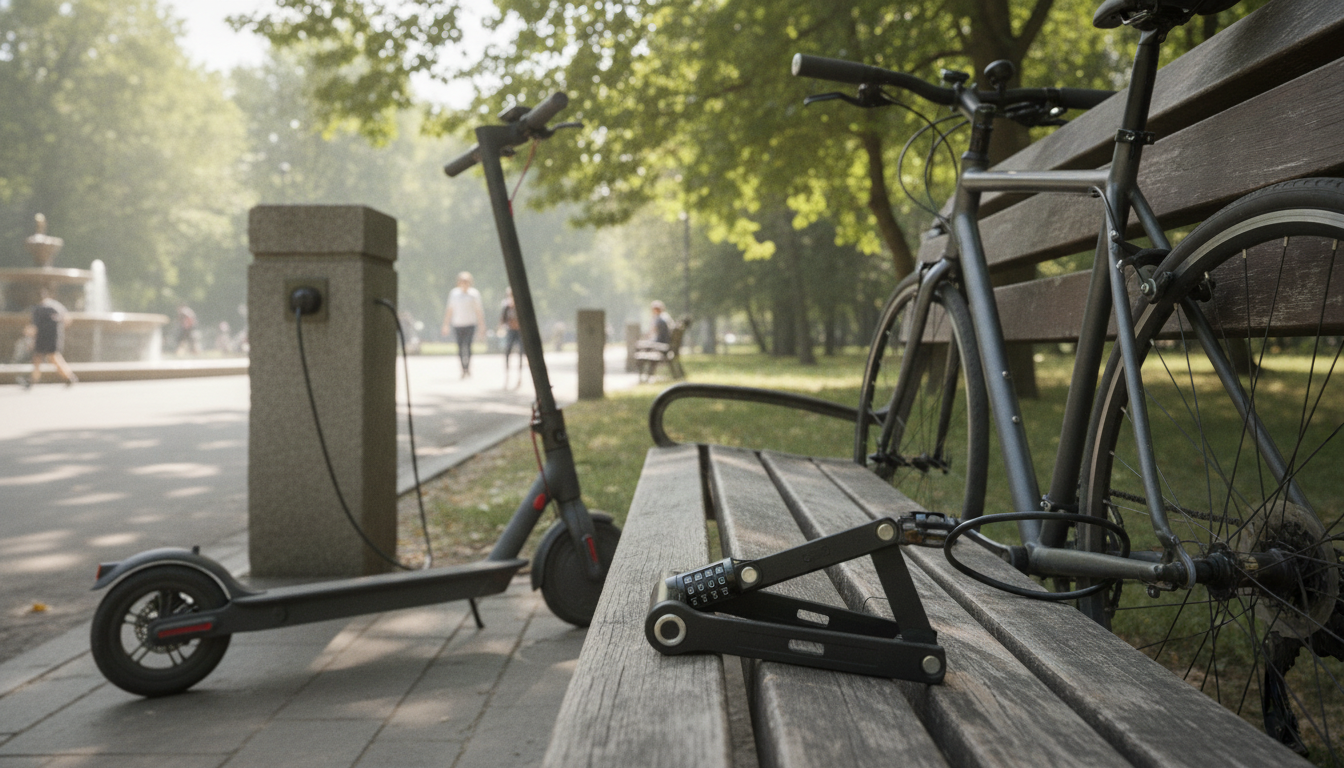
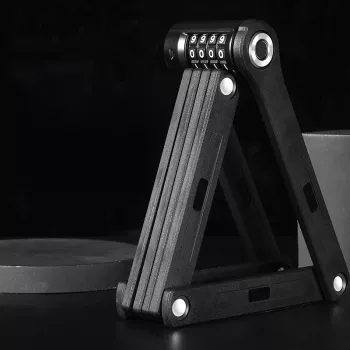
Foldable Bike Chain Lock with Password for Bikes and E‑Scooters
A lock should be fast to use, hard to attack, and easy to carry. A foldable chain-style lock with a resettable password is designed for daily stops—locking a bike outside a café, securing an e‑scooter at the office, or adding a second layer of protection at home—without the hassle of keys. For more guidance, see Best Bike Lock of 2026: Strong and Practical | Ultimate Bicycle Security.
What This Lock Is Designed to Do
Daily riders tend to want the same few things: something compact enough to bring along, secure enough to discourage opportunistic theft, and simple enough to use without slowing down every stop. A foldable chain/segment lock with a password combination is built around that routine. For further reading, see Best bike chain locks 2026: Our pick of versatile bike locks.
- Provide a practical balance of portability and theft resistance for everyday parking situations
- Use a resettable password so there’s no key to lose or copy
- Fold/compact down for easier transport than a long chain or bulky U‑lock
- Work for multiple frame styles and compact vehicles like e‑scooters
Password Convenience Without Key Hassles
Combination access shines when a quick lock-up is part of your normal rhythm. Instead of checking pockets for keys (or worrying about a spare), you can rely on a code you control.
- Set-and-reset combination concept: choose a code that’s memorable but not guessable—skip birthdays, repeating digits, and simple sequences.
- Day-to-day speed: combination entry can be quick for errands and short stops once it becomes muscle memory.
- Shared access: useful for households where more than one rider needs to secure the same bike or scooter.
- Routine checks: confirm the mechanism turns smoothly and the dials/buttons aren’t clogged by dirt or grit.
For commuters who park multiple times a day, that “no-key” workflow can be the difference between consistently locking up and occasionally taking a risky shortcut.
Heavy-Duty Protection: What Matters Most
“Heavy-duty” should mean more than weight—it should translate into real resistance to common attacks like cutting, prying, and tampering. While no portable lock is invincible, build quality and smart use can significantly improve outcomes.
- Material and construction: thicker, hardened components generally resist cutting and prying better than thin links or cable locks.
- Joint and hinge design: foldable structures can reduce leverage points compared with loose, swinging chains.
- Lock body durability: a solid housing and tight tolerances help reduce tampering opportunities.
- Real-world security mindset: security improves when combined with smart parking choices and good technique.
If you like to benchmark security, third-party standards can help clarify what different products are designed to withstand. Sold Secure explains security ratings and testing approaches used across many lock categories.
Sold Secure – Security Product Standards and Ratings
How to Lock a Bike or E‑Scooter More Securely
Even a strong lock can underperform with weak anchoring. A few small habits can add meaningful friction for thieves—often without adding any time for you.
- Lock to an immovable object: choose a properly installed rack or an anchored fixture. Avoid thin signposts that can be lifted out or removed.
- Capture valuable parts: for bikes, pass the lock through the frame and at least one wheel when possible. For scooters, secure the stem/main frame around a fixed object rather than accessories.
- Keep the lock off the ground: this reduces leverage for prying and makes tool positioning harder.
- Choose high-visibility spots: well-lit, busy areas reduce privacy and time for attackers.
- Double-up for higher risk: pairing a foldable password lock with a second lock (like a U‑lock or wheel lock) increases time and complexity for theft attempts.
For more practical theft-prevention habits (like where to park and what to record for recovery), resources such as BikeIndex’s prevention guide are a helpful reference.
BikeIndex – Bike Theft Prevention
Lock Types at a Glance: When Foldable Chain Styles Shine
Different lock types solve different problems. Foldable chain/segment locks often stand out for riders who want structure and reach without committing to a heavy, full-length chain.
| Lock style | Portability | Best for | Trade-offs |
|---|---|---|---|
| Foldable chain/segment lock (password) | High | Errands, commuting, bikes and many e‑scooters | Security depends on build quality; needs proper locking technique |
| Cable lock | Very high | Quick low-risk stops, accessory locking | Usually vulnerable to basic cutting tools |
| U‑lock | Medium | Frame locking in high-risk areas | Less reach; can be awkward with large objects |
| Heavy chain + padlock | Low | Longer parking, higher-risk locations | Weight and bulk; can mark frames if not sleeved |
Care, Storage, and Weather Tips
Featured Picks Available Now
- Foldable Bike Chain Lock with Password – Heavy-Duty Anti-Theft for Bikes & E-Scooters ($63.51)
- Wireless Retro Typewriter Keyboard with Stand & Round Keycaps ($64.51)
- 3D Puzzle Golden Coin Turtle ($86.51)
Check today’s price and availability
A Practical Option for Daily Riders
FAQ
Is a password lock secure enough for a bike or e‑scooter?
It can be, but security depends on the lock’s build quality and how it’s used. A combination mechanism removes key-related risks, but you still need solid anchoring, smart parking, and good locking technique to reduce theft chances.
What should be locked on an e‑scooter?
Secure the main frame or stem to a fixed, immovable object, keeping the lock tight and ideally off the ground. Avoid locking only to removable parts or accessories that can be detached and left behind.
How should a combination be chosen and maintained?
Choose a unique code that avoids common patterns, then test it regularly to confirm smooth operation. Keep the lock clean and dry, and address any grit or sticking early so you’re not fighting the mechanism when you need it most.







Leave a comment