Cordless Vacuum Not Working? Fix Power, Clogs, Filters
Why won’t my cordless vacuum work?
When a cordless vacuum won’t turn on, won’t stay on, or suddenly loses suction, the problem is usually something simple: power, airflow, or a safety cutoff. A quick, systematic check can save time (and avoid replacing parts that are still fine).
1) Confirm it’s actually getting power
Start with the basics: make sure the charger is firmly seated in the wall and the vacuum (or battery) is fully clicked into its charging dock. If the charging light never comes on, try a different outlet. Many cordless vacuums also won’t run if the battery isn’t locked into place—remove it and reinsert it until it snaps securely.
2) Check for a battery issue
If the vacuum runs for only a few seconds or shuts off under load, the battery may be weak, too hot, or too cold. Let it cool down if it was used continuously, then try again after charging. If it’s an older unit, reduced runtime and sudden shutdowns can point to a battery that’s nearing the end of its service life.
3) Clear airflow blockages
Clogs are a top reason a cordless vacuum “works” but doesn’t clean. Empty the bin, then inspect the wand, floor head, and any narrow passages for packed debris. Many models have a simple access door near the brush roll or neck—open it and remove any obstruction. A clog can also trigger a protective shutdown in some vacuums.
4) Inspect the brush roll and filters
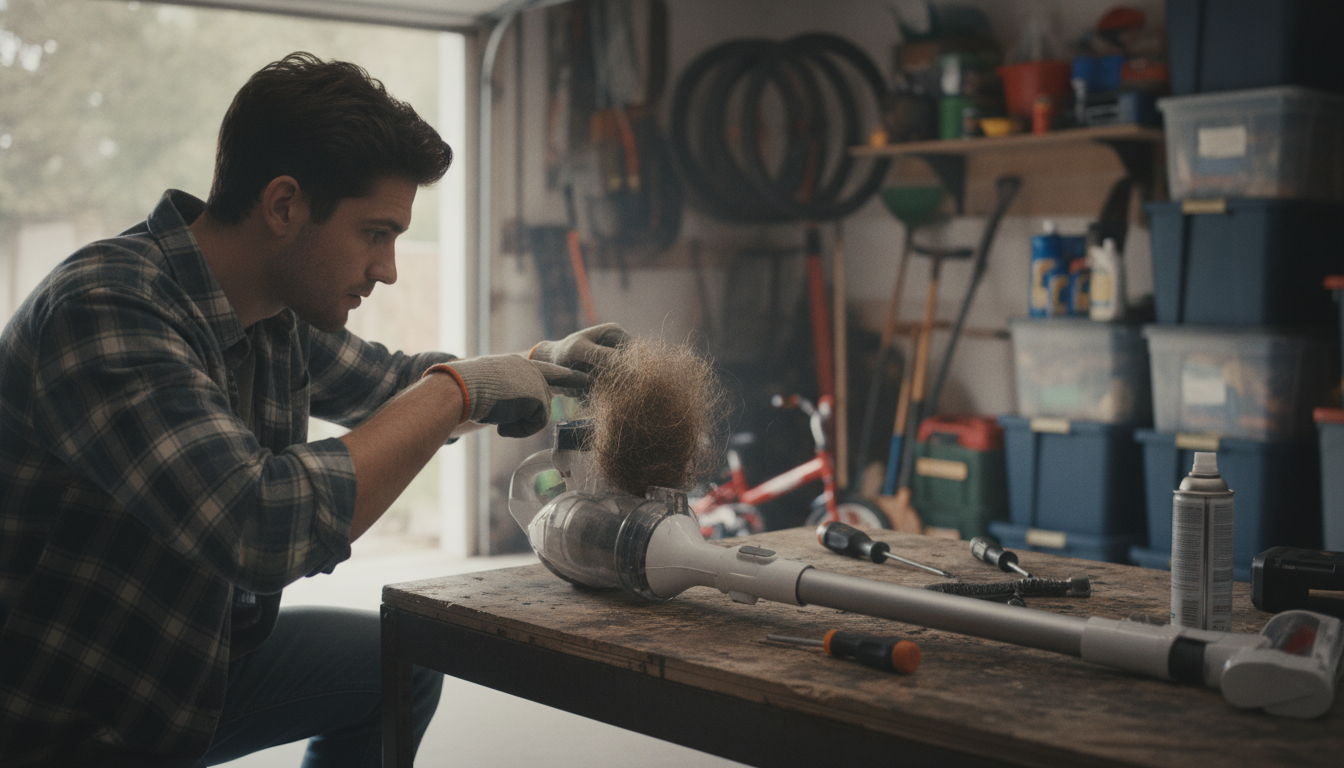
Hair and string wrapped around the brush can stall the motor or reduce pickup. Remove the brush (if your model allows) and cut away tangles. Dirty filters can cause weak suction and overheating; tap off dust or rinse washable filters and let them dry completely before reinstalling.
5) Look for connection or latch problems
If attachments keep popping off or the vacuum only works when held at a certain angle, check for cracked clips, worn seals, or debris stuck in the joint. Even a small gap can tank suction.
For a more detailed, model-agnostic troubleshooting checklist, visit the full guide here: Why won’t my cordless vacuum work?
FAQ
Why does my cordless vacuum keep turning off after a few seconds?
This is commonly caused by a clogged airway, a jammed brush roll, or an overheating safety cutoff. Fully charge the battery, clear blockages, clean filters, and let the unit cool before testing again.









Leave a comment